


No universal dollar figure or salary percentage tells you the "right" engagement ring budget. What works for one couple could stretch another too thin and feel unnecessarily modest for someone else. The number that makes sense for you depends on your income, savings, debt, and what you and your partner actually want the ring to look like.
This guide covers what real 2026 spending looks like, why the old salary rules don't hold up, and how to land on a budget you'll still feel good about a year from now.
Spend anywhere from $500 to $6,500 on an Engagement Ring.
The honest answer: spend what fits comfortably within your finances after covering savings, debt, and near-term expenses. That's a more useful starting point than any fixed percentage of your paycheck.
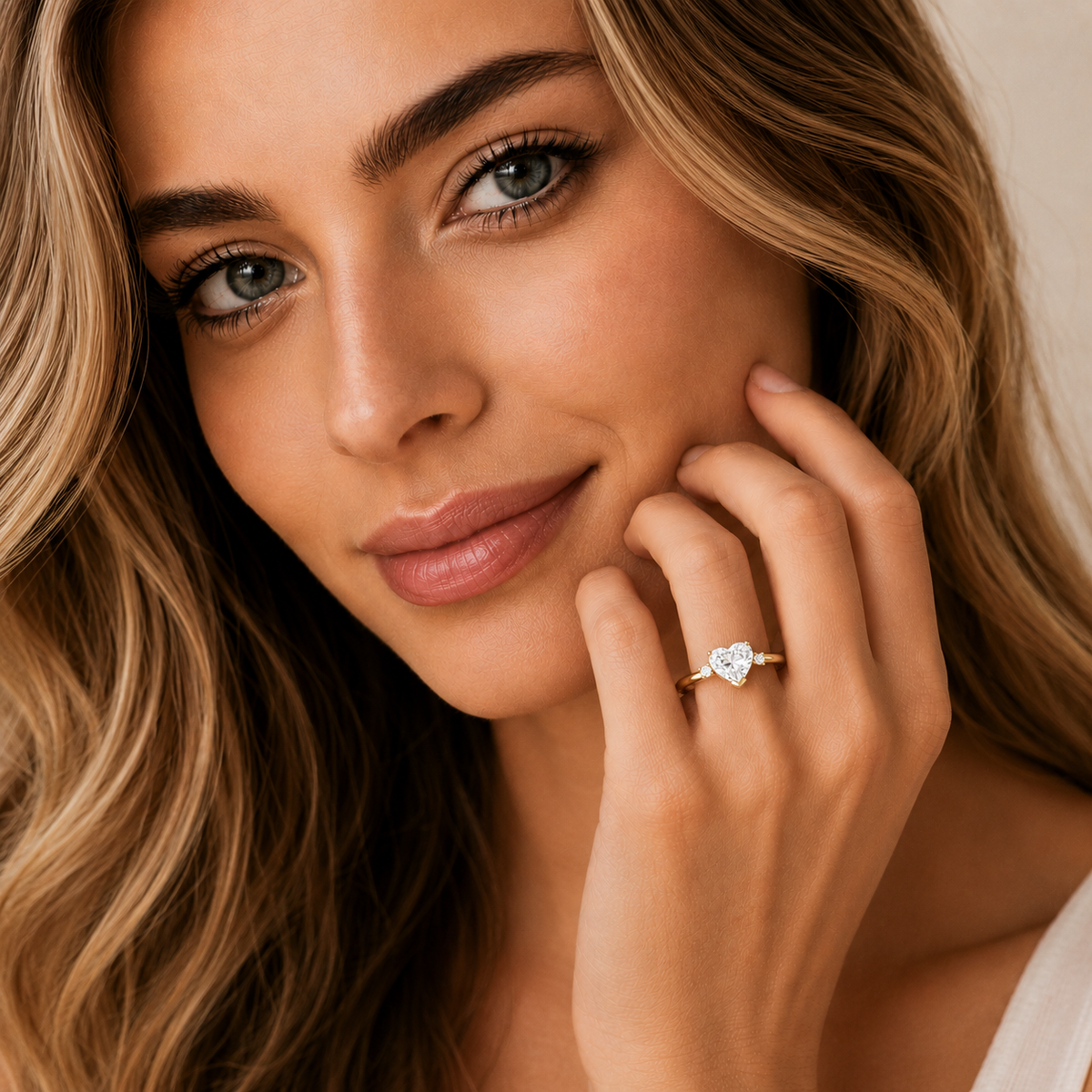
Recent bridal industry surveys, including studies from sources like The Knot, put the reported average around $4,500–$6,500. That average gets pulled upward by high-end purchases, though — the median, where half of couples spend more and half spend less, sits closer to $3,000–$4,000. Treat any single number as a benchmark, not a target.
Here's how that plays out at different levels:
-
Under $2,000 — Smaller carat weights, lab-grown diamonds, simpler settings.
-
$2,000–$4,000 — Where a large share of couples land: a solitaire or halo with a modest center stone.
-
$4,000–$7,500 — More flexibility on carat weight, cut quality, or a natural diamond with solid specifications.
-
$7,500–$10,000+ — Larger center stones, premium cut grades, more elaborate settings.
-
Premium budgets — Customization, larger stones, and rarer diamond characteristics become realistic.
These are examples, not recommendations. Where you land depends on your own finances, not on what any bracket "should" look like.
The Real Story Behind the Two-Month Salary Rule
You've probably heard some version of it: spend two months' salary on a ring, three if you really love her. It sounds like tradition. It isn't.
The idea traces back to a De Beers advertising campaign from the late 1930s, when diamond sales had slumped during the Great Depression, and only about one in ten engagement rings contained a diamond. De Beers hired the agency N.W. Ayer, which built a cultural association between diamonds and lasting love rather than pushing a specific product. In 1947, Ayer copywriter Frances Gerety coined the line "A Diamond Is Forever," still in use today. The salary-based spending suggestion—starting around one month's pay and eventually settling near two—came from that same campaign.
None of this means diamonds aren't worth buying. It just means the guideline was never rooted in personal finance advice — it was built to sell diamonds, and it worked. Worth remembering next time a "rule" pushes you toward a number that doesn't fit your budget.
How to Set Your Engagement Ring Budget

Skip the formula and work through your real financial picture instead.
-
Start with take-home income, not gross salary — that's what you can actually put toward a ring without disrupting everything else.
-
Review your savings before committing money; most guidance suggests keeping three to six months of essential expenses set aside, and draining that cushion can leave you exposed.
-
Consider existing debt — credit cards, student loans, and car payments compete for the same income, and high-interest debt should usually take priority since carrying it longer costs more than most rings are worth, for example, anniversary rings.
-
Account for what's coming next, since an engagement is the first of several big expenses: wedding costs, a honeymoon, moving. Setting a ring budget in isolation is one of the more common ways couples end up stretched a few months later.
-
Finally, set a comfortable limit, not a maximum — the right number is usually well below what a credit line would technically allow.
|
Financial Situation |
Suggested Ring Budget Approach |
|
Limited savings or high debt |
Keep the ring budget conservative |
|
Stable income and savings |
Choose a budget aligned with discretionary income |
|
Strong savings and low debt |
More flexibility for higher specifications |
|
High disposable income |
Budget can reflect personal priorities rather than salary rules |
Talk to Your Partner Before You Settle on a Number
If you're planning a surprise proposal, this can feel tricky — but it's worth having at least a general conversation about ring style and spending beforehand. Many couples now shop together entirely, and even when the proposal itself stays a surprise, gathering hints about metal, setting, or stone shape ahead of time avoids an expensive resize later. If you do shop together, be upfront about your budget range early on — it's easier to compare options honestly when you're both working from the same number.
What Determines the Price of an Engagement Ring?
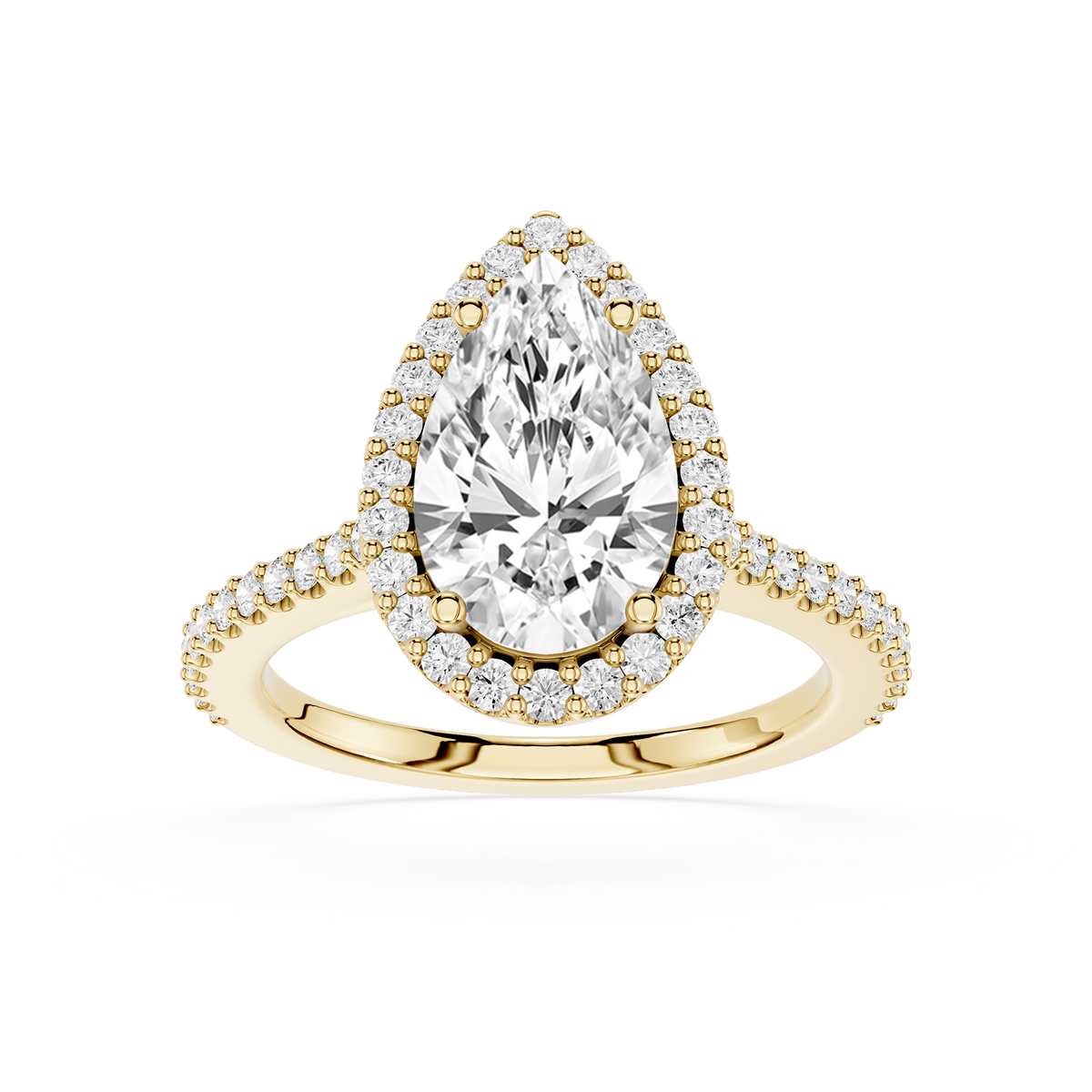
Ring prices come from the diamond and the setting together, shaped by several factors:
-
Diamond type: Is it a lab-grown or natural diamond?
-
Carat weight: The diamond's size by weight, like 1 carat or 3 carats. Carat weight and size differ in a diamond.
-
Cut: How well it's proportioned to reflect light; choose from Excellent to Very Good.
-
Color: How close to colorless it appears; choose from D to K color.
-
Clarity: Whether internal or surface characteristics are visible; prefer FL to VVS clarity.
-
Shape: Round and oval diamonds are mostly chosen. Go for other shapes like cushion or emerald, which are priced differently.
-
Certification: Look for the independent grading certificate from a lab like GIA or IGI.
-
Setting: Prong count and detail affect metal use and labor, which affects the overall ring price.
-
Metal: Yellow gold, rose gold, platinum, and white gold carry different base costs.
-
Craftsmanship and retailer: Handmade or designer pieces cost more than mass-produced pieces.
-
Customization: Engraving or bespoke work adds to your ring's cost, so choose the design accordingly.
None of these work in isolation. A diamond with excellent cut can look more brilliant than a larger, mediocre-cut stone, even at a lower price. If you like clean, classic lines, Lockstone Jewels' solitaire engagement ring collection shows how far a simpler design can stretch a given budget.
Lab-Grown vs. Natural Diamonds: How They Affect Your Budget
When you have a budget of $500 to $2,000, a lab-grown diamond is the right choice. For a $ 2,000+ budget, go with a natural diamond ring with a smaller stone, but yes, you get a mined diamond.
Compared to both natural and lab-grown diamonds, there’s no difference; they're only made under different conditions. Natural diamonds form underground over long timeframes, while lab-grown diamonds are produced using controlled methods like CVD or HPHT that replicate those same conditions.
Cost by Carat: A Quick Reference
Carat weight is one of the biggest price drivers, but the jump between sizes isn't linear — prices appear to accelerate around whole-carat marks like 1.00ct or 2.00ct, partly because demand clusters there.
That creates an opportunity: a diamond weighing 0.90ct or 1.90ct can look essentially identical to its whole-carat counterpart while costing noticeably less, simply because it sits just under the more-demanded threshold. If size matters but budget is tight, asking to see stones just under a round number is one of the more reliable ways to save without a visible trade-off. Shape plays a role too — elongated cuts like oval, marquise, and pear can appear larger than a round diamond of the same weight, since more of that weight spreads across the visible surface.
How Much of Your Budget Should Go Toward the Diamond?
Most ring budgets split between the center diamond and the setting, with the diamond usually taking the larger share. Within that, you're weighing carat weight, cut, color, and clarity against each other. Diamond carat weight gets the most attention because it's easiest to compare, but it isn't the most important factor in how a diamond looks — a well-cut smaller stone often appears brighter than a larger, poorly cut one at the same price.
How to Get More Diamond for Your Budget
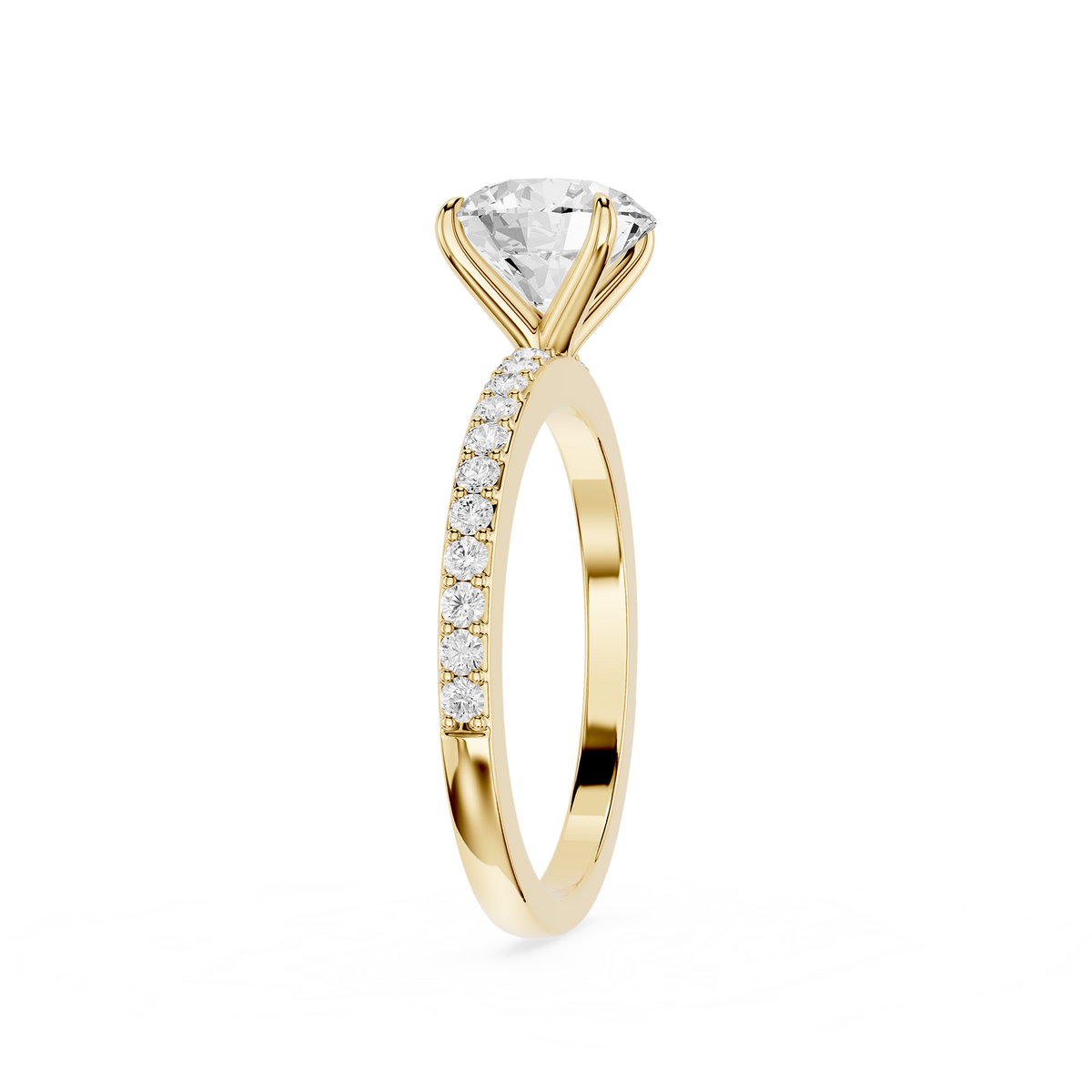
A few practical ways to stretch a budget without cutting corners on appearance:
-
Choose an elongated shape (oval, marquise, pear) for a larger face-up look at the same weight.
-
Buy just under a whole-carat mark — 0.90ct instead of 1.00ct — for a size that reads the same but costs less.
-
Prioritize cut over chasing carat weight, since it drives brilliance the most.
-
Consider eye-clean clarity grades, which cost less than flawless with no visible difference.
-
Be flexible on color — near-colorless grades often look indistinguishable once set.
-
Compare lab-grown and natural diamonds directly for your target specifications.
-
Choose a simpler setting, since intricate pavé or halo designs use more metal and labor.
None of these guarantee a specific dollar amount saved, but they're reliable ways to put your budget where you'll actually notice it.
Does Where You Live Change Your Budget?
Yes, more than most buyers expect. Cost of living, local markups, and regional buying norms all shift what "typical" spending looks like — a major coastal city tends to run higher than a smaller market, for the same reasons other big purchases do.
For buyers in the UK, Canada, and Australia, currency and local pricing add another layer. Retail prices for imported diamonds reflect duties, shipping, and exchange rates on top of the base cost, so a ring priced in USD may land differently once converted. Check a retailer's actual local pricing rather than assuming a direct currency conversion will match what you'd pay.
Should You Finance an Engagement Ring?
Financing can make a higher-spec ring accessible sooner, but it has real trade-offs.
-
Promotional 0% financing works well if you can pay it off before the window closes — missing that often triggers retroactive interest on the full balance.
-
Interest-bearing financing or credit cards raise the ring's total cost over time, so a ring that looks affordable at a low monthly payment can end up costing considerably more.
-
Buy-now-pay-later plans work like short-term loans and deserve the same scrutiny.
The core risk is monthly payment psychology — focusing on what feels manageable each month rather than the total you're committing to repay. A lower payment doesn't mean a lower overall cost, and you should weigh financing against your other financial goals, not use it to skip setting a budget in the first place.
Don't Forget Insurance and Appraisal
A cost that catches many buyers off guard: protecting the ring afterward. Homeowners' or renters' policies often cap jewelry coverage at a few hundred to a couple thousand dollars—well below what many rings are worth—so you usually need a separate jewelry policy or rider for real coverage.
An independent appraisal, separate from the retailer's sales price, establishes the insured value and gives you documentation if the ring is ever lost, stolen, or damaged. Annual premiums typically run as a small percentage of that appraised value, so it's worth building into your budget rather than treating as an afterthought.
What Should You Prioritize When Buying an Engagement Ring?
Priorities differ by couple, but most buyers benefit from thinking through this list before shopping:
-
Overall budget
-
Diamond cut quality
-
Diamond shape
-
Desired visual appearance
-
Diamond origin preference (lab-grown or natural)
-
Setting style
-
Metal choice
-
Certification
-
Return, resizing, and warranty policies
-
Seller reputation and transparency
Cut quality and overall appearance tend to matter more day to day than maximizing carat weight. Deciding priorities in advance makes it easier to compare options without getting pulled toward whatever a retailer is trying to upsell.
Diamond Engagement Ring Budget Examples

-
$2,000 budget
A lab-grown diamond just under a whole-carat weight, well-cut and eye-clean, set in a simple solitaire. Lockstone Jewels' engagement rings under $2,000 collection is built around exactly this range.
-
$5,000 budget
In this range, you can choose either a larger lab-grown diamond with strong specs or a natural diamond at a more modest carat weight. You can pair that with a slightly more detailed setting, like a hidden halo.
-
$8,000 budget
Within the $8,000 budget, you have enough flexibility to balance a solid natural diamond with better color and clarity, or a noticeably larger lab-grown stone, alongside a premium metal like platinum. Lockstone Jewels' engagement rings above $2,500 collection covers this range and beyond.
-
$12,000+ budget
Customization, larger center stones, premium cut grades, and rarer characteristics become realistic. Lockstone Jewels' custom jewelry design service lets you build a piece around specific stone and setting preferences.
Shop Lab-grown Diamond Engagement Rings with Lockstone Jewels
For buyers working within a defined budget, lab-grown diamonds are worth comparing directly against natural stones with similar specifications—since the two are optically and chemically the same. Lockstone Jewels' lab-grown diamond engagement ring collection is organized by style and budget, making it easier to compare specifications once you've settled on a number that works for you.
FAQs
-
How much should you spend on an engagement ring in 2026?
There's no fixed amount. A sensible budget depends on your take-home income, savings, debt, and upcoming expenses, not a set percentage of salary. Recent surveys report average spending around $4,500–$6,500, though the median tends to run closer to $3,000–$4,000.
-
Is $5,000 enough for an engagement ring?
Yes, for many buyers. A $5,000 budget can typically cover a well-cut diamond of solid size — natural or lab-grown — paired with a quality setting.
-
Is $10,000 too much to spend on an engagement ring?
Not necessarily. It depends entirely on your financial situation — for buyers with strong savings and low debt, it may fit comfortably; for others, a lower budget would be more prudent.
-
Do I need insurance for an engagement ring?
Most homeowners' or renters' policies cover only a small amount of jewelry value by default, so you usually need a separate policy or rider for full protection.
-
Are lab-grown diamonds better for a limited budget?
Lab-grown diamonds generally cost meaningfully less than natural diamonds with comparable specifications, often letting you choose a larger or higher-quality stone within the same budget.
-
Should I finance an engagement ring?
Financing can spread out the cost, but interest charges can raise the ring's total price significantly. If you finance, prioritize 0% offers you can pay off in full.
-
What matters most when buying a diamond?
Cut quality has the biggest impact on brilliance, often more than carat weight alone. Balancing cut, clarity, color, and shape usually produces a better-looking ring than maximizing any single factor.