


Quick answer: The best ring settings for an oval diamond manage its two known quirks—the "bowtie" shadow across the center and the exposed points at each tip. A bezel or half-bezel protects the pointed ends and works well for daily wear. A cathedral solitaire or hidden halo keeps the elongated shape front and center with minimal distraction. Moving to modern ring settings, a cluster, halo, or three-stone setting hides a faint bowtie while adding visible size and sparkle. Below are 15 real settings from Lockstone Jewels' IGI-certified lab-grown collection, grouped by the look and lifestyle each one solves for.
The 15 Best Ring Settings for an Oval Diamond
1. The Bezel Solitaire Setting — Best for Maximum Sparkle Without a Bigger Center Stone
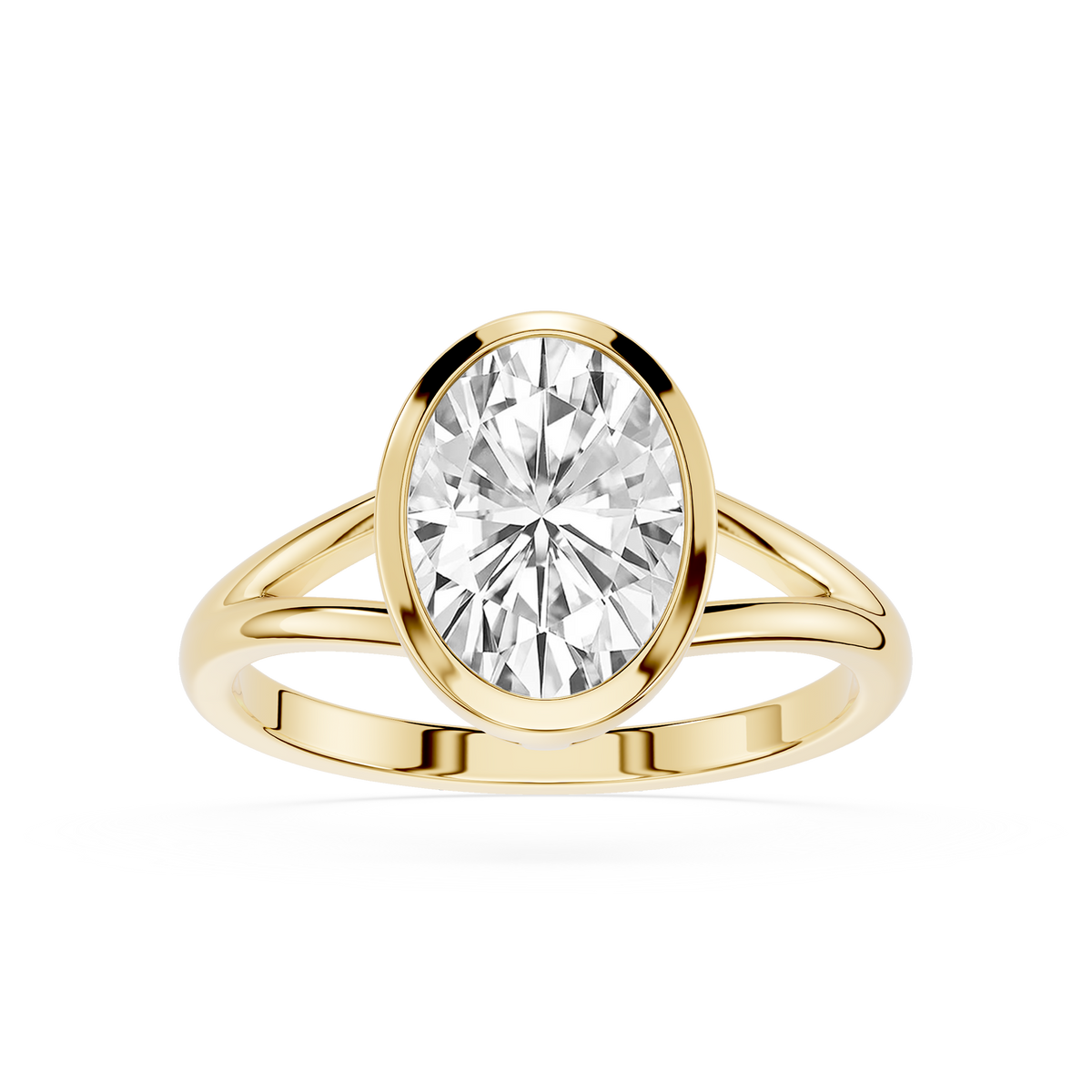
This oval bezel-set engagement ring is a prime example of how the pointed corners can be protected with ease and provide a comfortable wearing experience. From across the room, it reads as one larger, irregular diamond —a favorite for buyers who want visual size without paying carat-for-carat prices. With a 1.75 carat EF and VS clarity oval lab-grown diamond and a 14KT gold split band, it makes a perfect engagement ring for her. See the latest 2026 engagement ring trends for more ideas.
2. The Baguette Accent Setting — Best for an Art Deco Edge

When your love partner wants an oval diamond ring that looks like both an engagement and a wedding ring, this 2-carat oval with antique baguette-cut accents is the right choice. Straight-line baguette diamonds instead of rounds flank the center oval. The geometric contrast against the oval's curve gives it a vintage, Art Deco feel that a round-accent halo can't replicate.
3. The East-West Half-Bezel Look — Best for a Modern, Rotated Silhouette
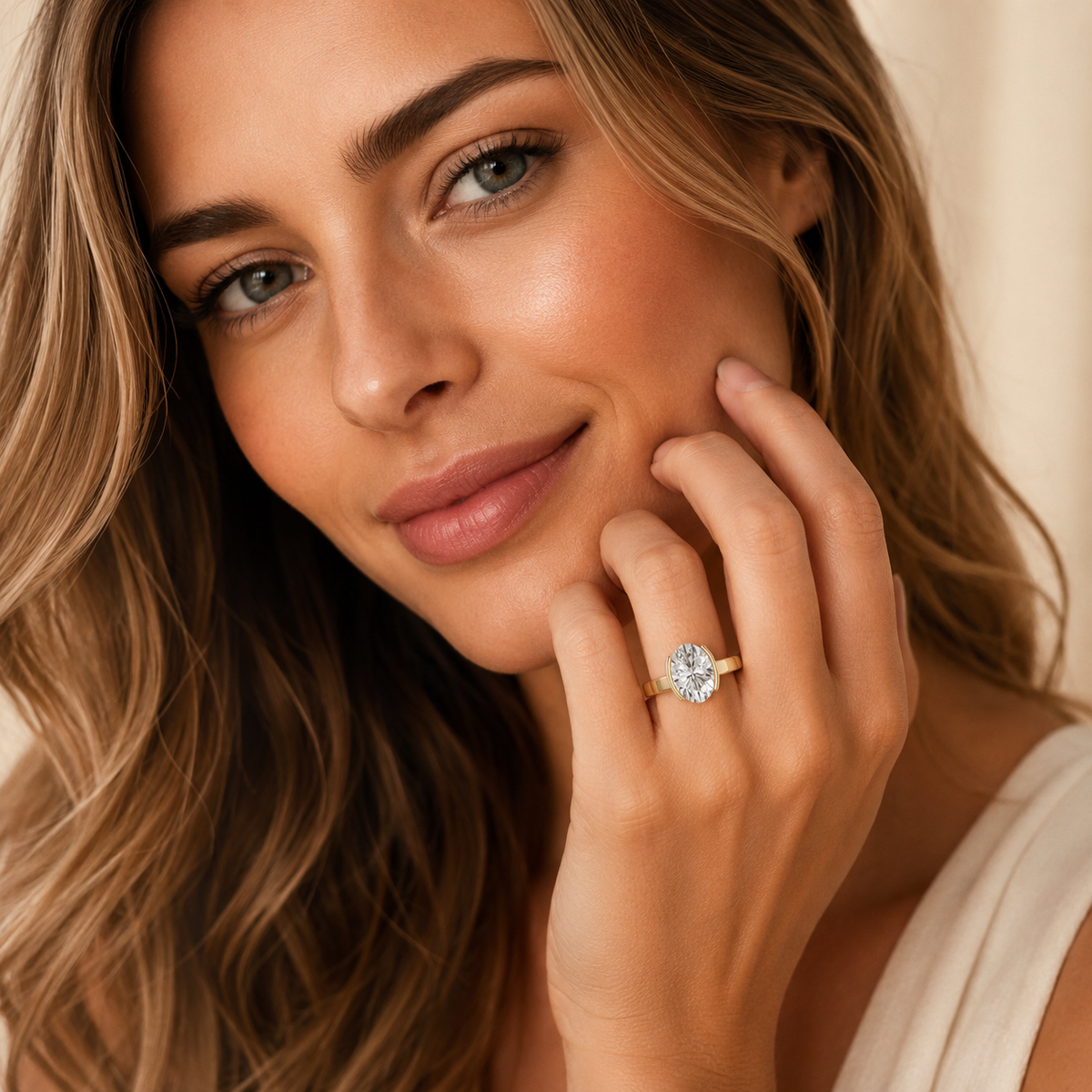
In solitaire engagement rings, we usually see a north-south orientation for the oval diamond. The same applies here, but with a customized ring, you can switch to an east-west setting ring where the Half-bezel metal guards the top and bottom edges while leaving the sides open for light and sparkle — a genuinely different look from any solitaire on this list, available in 14K/18K yellow, rose, and white gold or platinum.
4. The Hidden Halo Bezel With pavé – Best for "Secret" Sparkle
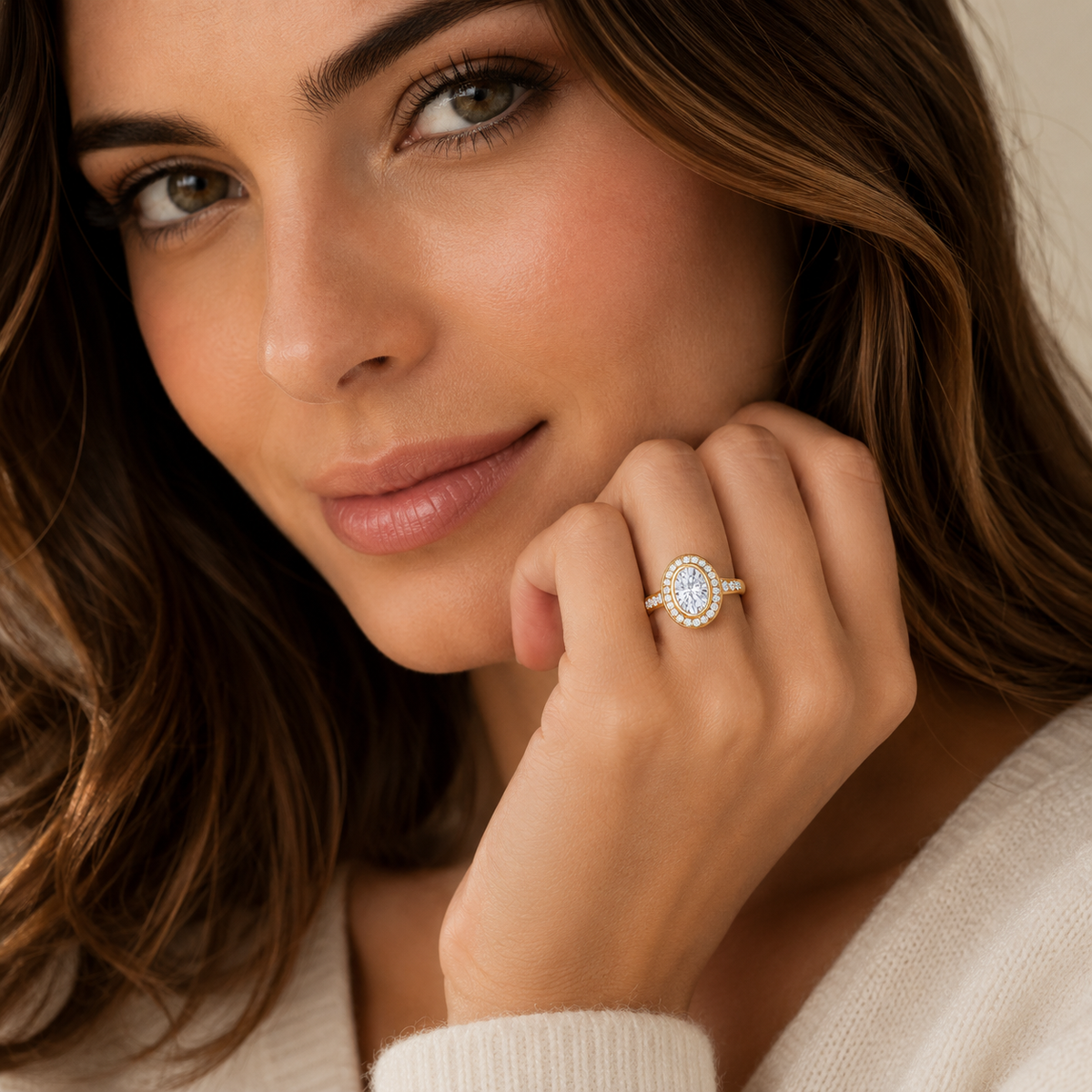
Your friend is right: a "hidden halo oval diamond ring" offers more sparkle on the finger. See this 1.71 carat lab-grown diamond engagement ring where the round-cut stones tuck a pavé band of tiny diamonds beneath the center stone, invisible from the top but catching light from every side angle. Paired with a full bezel and an EF color-grade oval diamond, it's one of the most durable options here—ideal for people who work with their hands but still want a surprise of extra brilliance.
5. The 3-Carat Floral Cluster Setting – Best for Romantic, Nature-Inspired Detail

A unique engagement ring is one of the most important choices when you want something that truly celebrates your love. This oval diamond floral cluster halo engagement ring delivers unmatched sparkle and a distinctive look. The round-cut accent stones form a blossom-like shape around the oval, softening its geometry into something closer to a flower in bloom. It's a strong pick for anyone drawn to nature motifs over strict symmetry.
6. The Classic Full Bezel – Best for Everyday Durability, and Editor's Pick for Versatility
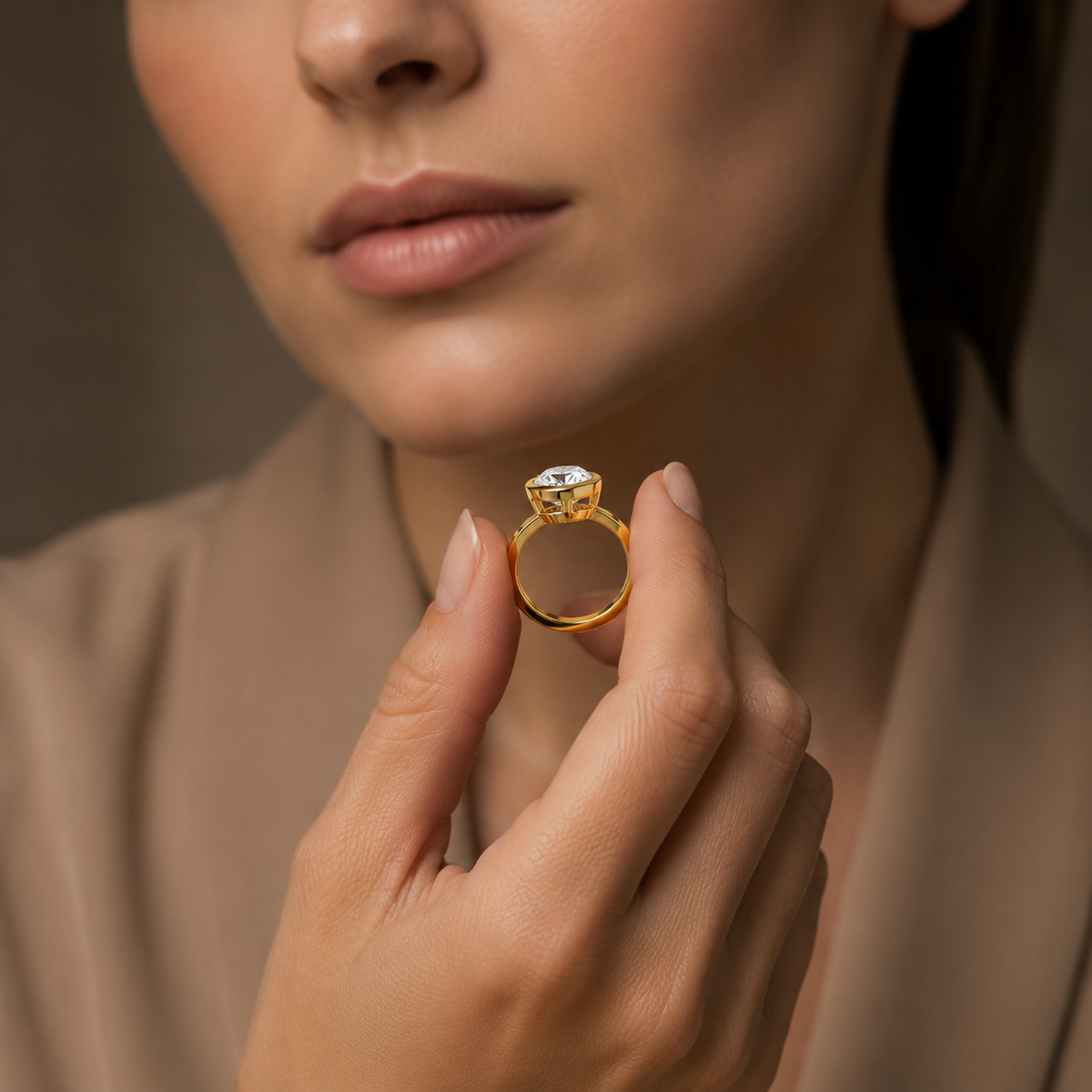
For full protection, the bezel setting is always a top choice because it suits everyday wear. This IGI-certified oval bezel-set engagement ring's full metal coverage guards both pointed tips, making it the safest oval setting here for someone who works out, gardens, or works with their hands daily. The clean, unembellished line of a full bezel pairs with almost any wedding band, metal tone like rose gold or yellow gold, or stacking ring a wearer adds later.
7. The Vintage Floral Cluster Halo – Best for Heirloom-Style Detail

You may have seen a Hollywood celebrity wear a vintage ring, or a famous internet personality promoting that design. If you're thinking of getting her a vintage-style ring with a round-cut pavé setting in a 2-carat oval diamond ring, this style is perfect. It layers a floral-cluster halo with vintage milgrain detailing, giving it an heirloom look without the decades-old price tag.
8. The Leaf Halo – Best Botanical Statement
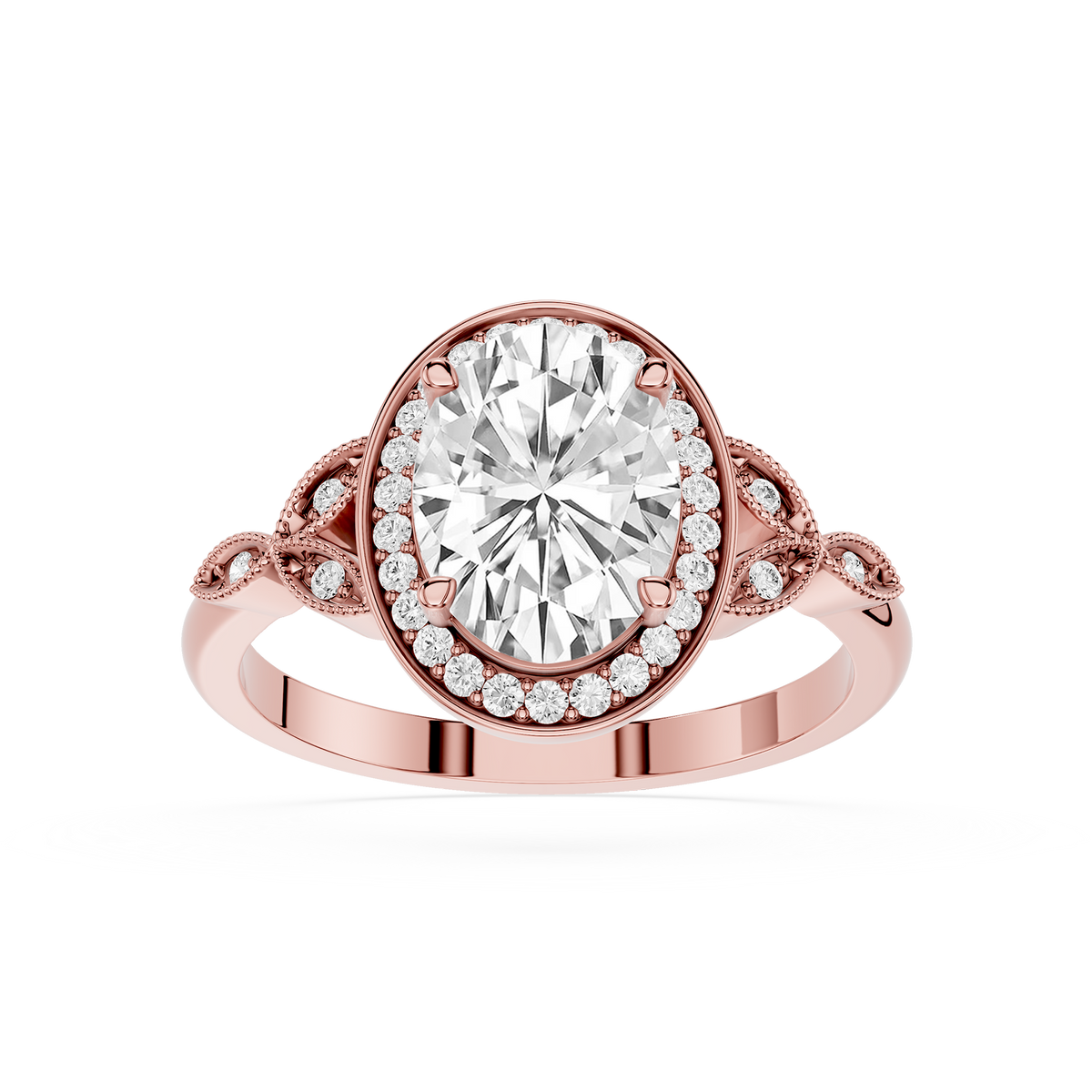
When she wants a luxurious-looking ring for an engagement or even a wedding band stack within a $2,500 budget, this 18KT gold leaf oval halo ring can be the perfect choice. It trades a traditional round halo for leaf-shaped detailing along the gallery, strong prong settings, and a unique carving on the shank, making it a distinctive choice for buyers who've already scrolled past a dozen halo rings and want something that reads as clearly different in a product photo or on a hand.
9. The Twisted Three-Stone – Best Symbolic Setting
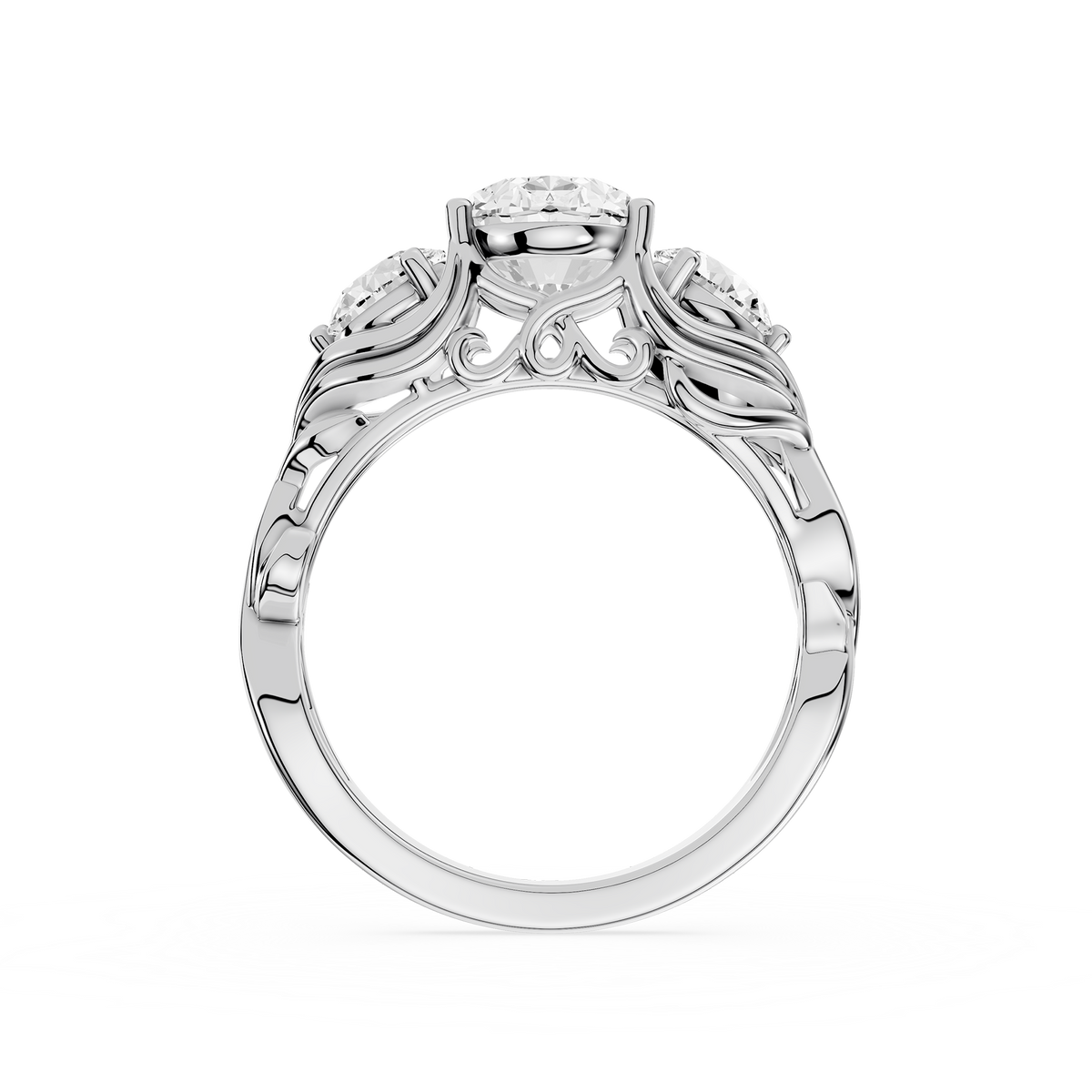
In oval diamond settings, three-stone is uncommon but a personalized choice for a couple who always share their "past, present, future" together. This 3-carat oval three-stone engagement ring brings something extraordinary to her finger, with the center oval and accent round brilliant cuts set under a secure basket for a strong grip. The ring's overall twisted design is updated with a modern braided shank instead of a plain one.
10. The Emerald & Oval Eternity Band – Best Two-Shape Statement
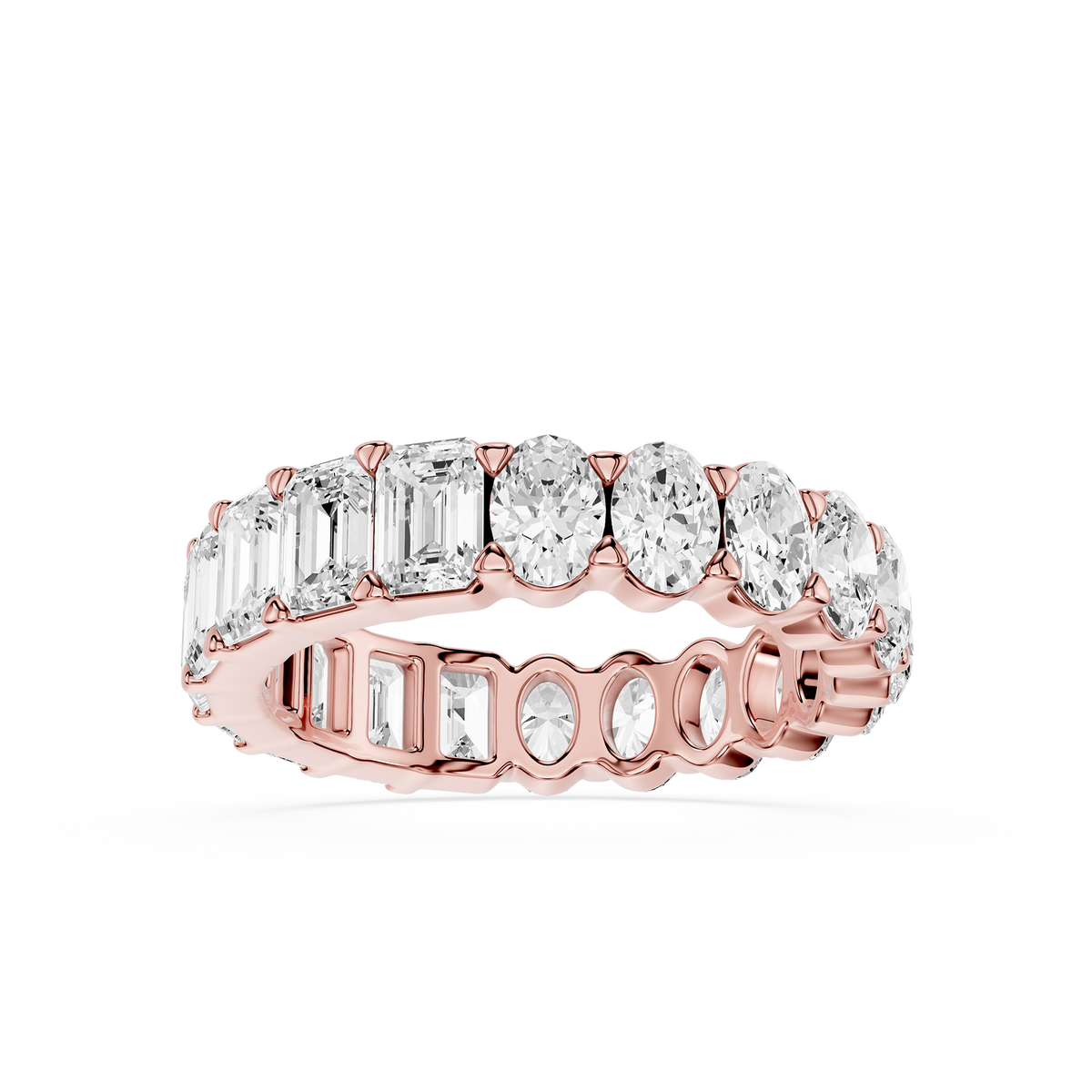
Have you ever seen an oval diamond eternity band made with the elongated emerald cut for an excellent, premium look, as celebrities prefer? This 4.4 carat lab-grown diamond eternity band makes it a reality as a strong stacking piece or anniversary band pairing for someone who already owns an oval solitaire. The pointed prongs grip the EF color grade diamonds securely and offer a comfortable fit in ring sizes (US) ranging from 4.5 to 9.0. Measure the ring size at home or at the jeweler's shop to ensure an identical size and avoid resizing.
11. The Cathedral Solitaire – Best Classic Choice for Traditionalists
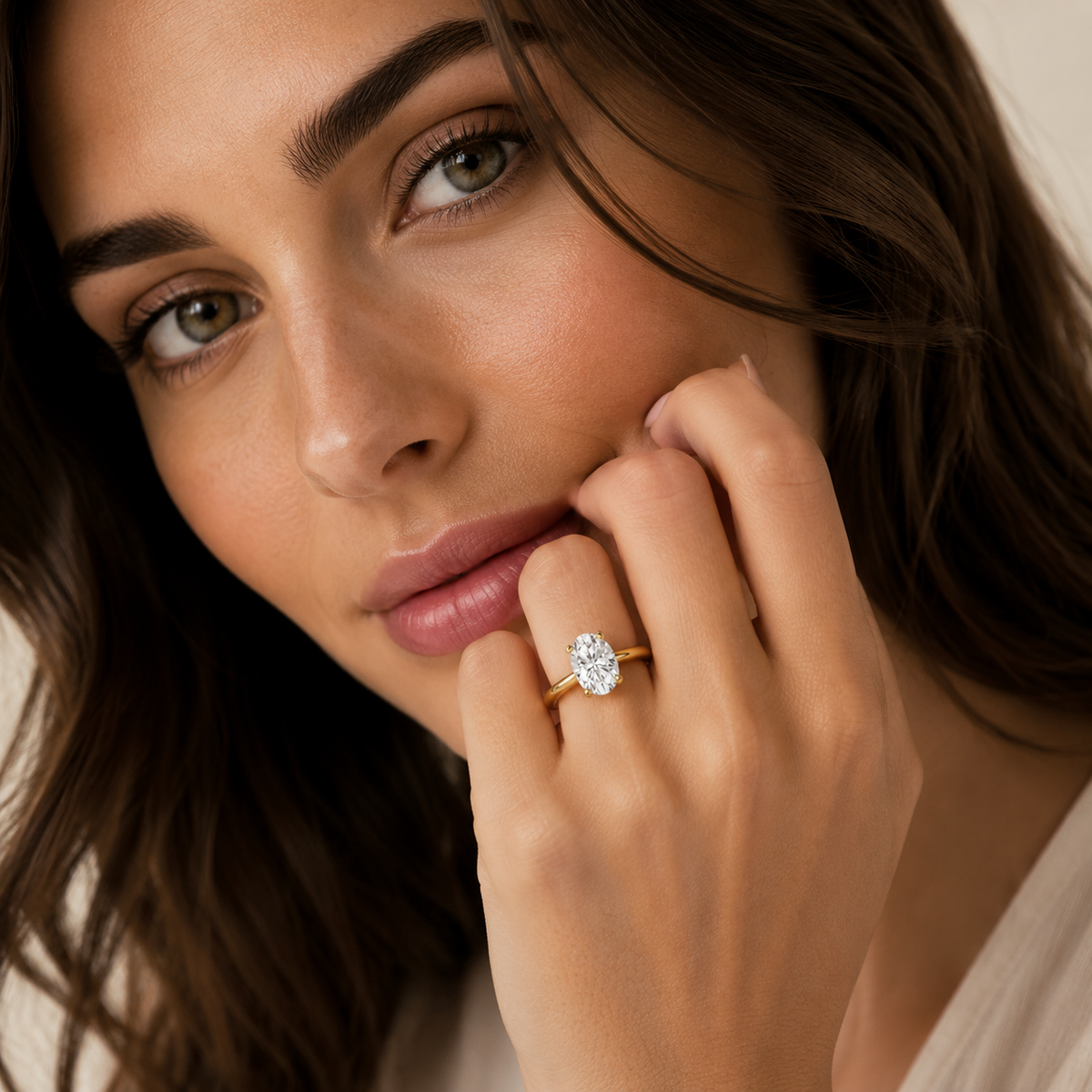
When selecting a cathedral setting engagement ring, the oval shape is a premium choice, and its elongated pointed corners complement the setting. It raises the center stone on arched cathedral shoulders, a design that reads as timeless rather than trend-driven in 14KT yellow gold. It's the pick for anyone who wants "just the diamond" with a bit of architectural lift for four round prong settings.
12. The Multi-Shape Halo Statement – Best for Non-Traditional Buyers
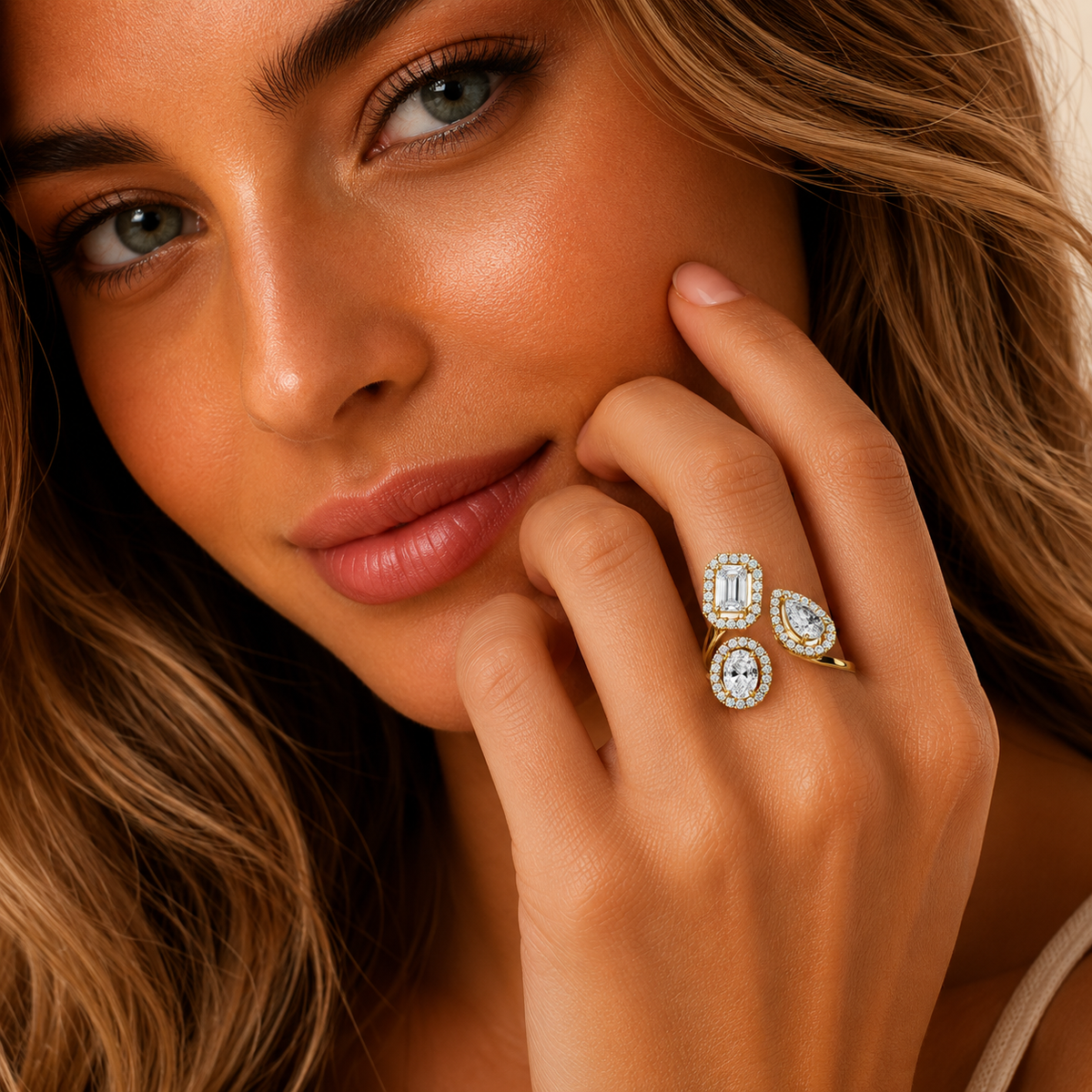
This 3-stone oval halo engagement ring pairs the center oval with two contrasting diamond shapes plus a halo — the most maximalist setting on this list, built for buyers who specifically don't want their ring to look like everyone else's. The bypass band style reminds one of the famous "2-carat Toi et Moi" setting modern couples prefer to have as their engagement ring in 14KT gold or 18KT tone.
13. The Low-Profile Cathedral Solitaire – Best for Modern Minimalists
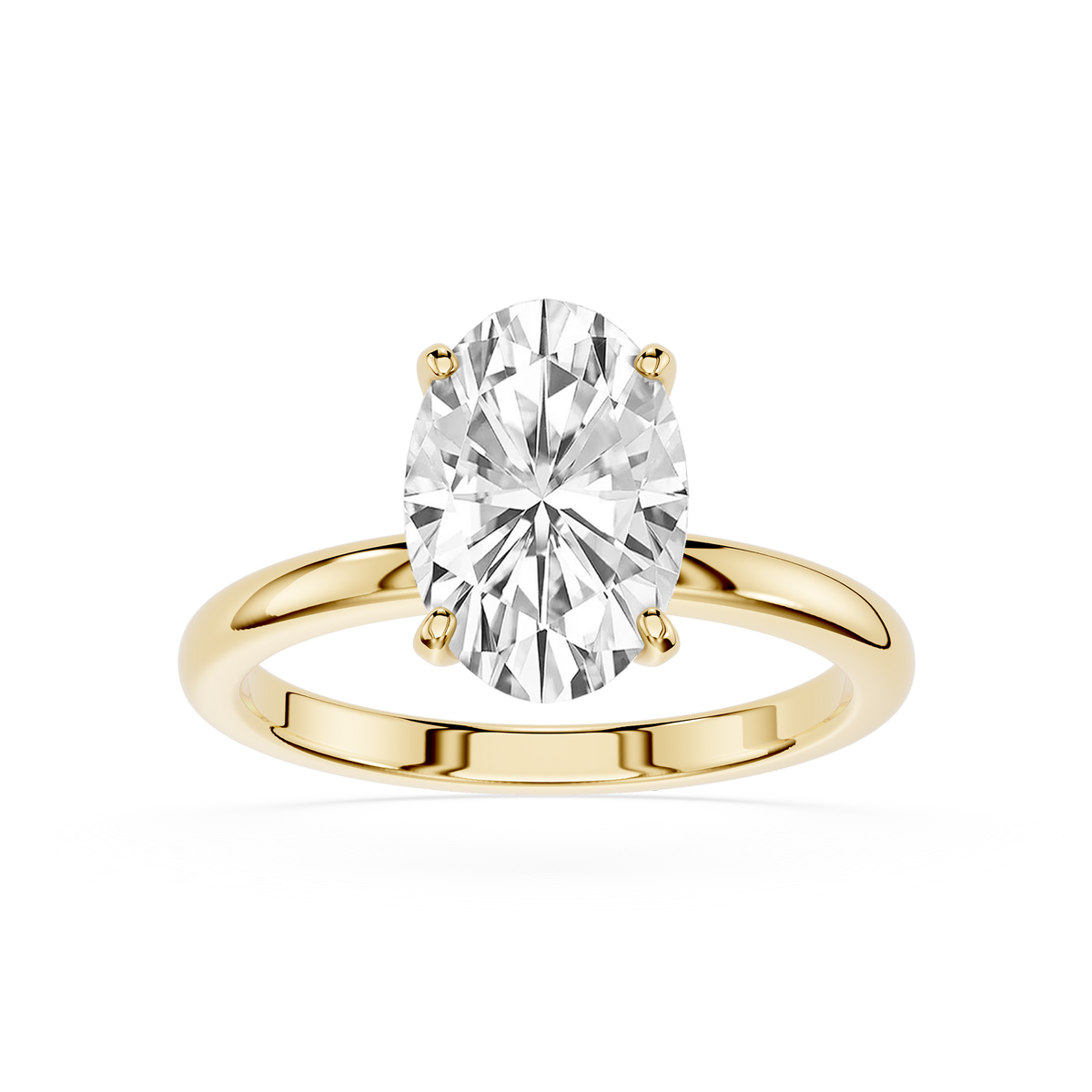
When buying a lab-grown diamond solitaire ring, the first question is whether a cathedral setting is enough. So, the answer is yes. See this 1.80 carat-weight oval solitaire ring, which shares the cathedral family with entry #11. Still, it is presented here as the more streamlined, lower-set option for buyers who want the cathedral lift without as much visual height.
14. The Bezel-Set Eternity Ring – Best for Stacking or an Anniversary Gift

This oval eternity ring is an ideal choice for committing to a lifetime of love with your partner. This 14KT yellow gold eternity ring features a full circle of bezel-set ovals around the band—the most protective stacking piece on this list, and a natural pairing with any of the solitaires or halo diamond engagement rings above.
15. The 4 Prong Cluster Ring – Best Symbolism of a Cute Relationship

When selecting a white gold prong setting ring, the oval diamond shape is ideal for sparkle and reflection. You can pair it with a diamond and gold pendant, stud earrings, and even rings to create a truly premium look that reflects her personality. With a 1.78-carat diamond weight, this four-prong setting engagement ring seems like the perfect gift to symbolize your relationship.
How to Pick the Right Oval Diamond Engagement Ring for You
If you take nothing else from this list, use these three questions to narrow 15 options down to one:
-
How active are your hands day-to-day?
Choose full bezel (#6) or hidden halo bezel (#4) if you work with your hands or play sports; choose a solitaire or halo if the ring mostly comes off for gym and dish duty anyway.
-
Do you want the ring to look bigger than its carat weight?
Cluster (#1), halo (#7, #8, #12), and three-stone (#9) settings all add visual size around the center stone.
-
Is this a first ring or a stacking piece?
Solitaires and cathedrals (#11, #13) work best as a standalone first ring; eternity bands (#10, #15) are built to stack.
-
What's the budget ceiling?
A cathedral solitaire (#11, #13) or classic bezel (#6/#14) typically carries the lowest accent-diamond overhead of the fifteen, since nearly every carat goes into the visible center stone rather than surrounding accents.
A practical starting point for the engagement ring budget is the "Under $1,000" and "Under $2,000" tiers, with clusters, halos, and eternity bands better suited to the "Above $2,500" range once you add more total carat weight.
But Why Are Oval Diamonds Famous for Rings?
There are some reasons:
-
First, the oval shape is long enough to look larger.
Even at 0.90 to 1.50 carats, they look larger than round or princess cuts. So, in photographs, they look beautiful as an engagement ring or wedding ring.
-
It suits almost any hand shape.
If you have a thin or slim hand, oval rings work well as a standout piece with any attire, whether it's daily office wear or occasional wear.
-
They cost less than a round brilliant-cut diamond and still sparkle.
For sparkle, the round cut is the top choice, but the oval is a close second after the princess cut. Compared to the cost, a 1-carat oval lab-grown diamond costs around $150 to $1,800, while a 1-carat round lab-grown diamond costs $250 to $2,500.
Why the Oval Cut Needs a Different Conversation Than "Just Pick a Pretty Setting"
An oval diamond behaves differently on the finger, and the setting you choose either works with those differences or fights them. Two things drive almost every setting decision on this list.
-
The bowtie effect.
Because an oval diamond is elongated rather than symmetrical in every direction, light doesn't return evenly across the stone. Most ovals show a faint, bow-tie-shaped shadow across the center—a natural result of the cut, not a flaw —though its intensity varies from stone to stone. A well-built setting (and a well-cut diamond) minimizes it; a lazy one makes it more obvious.
-
The pointed ends
Round diamonds have no vulnerable points. Ovals have two — at the narrow tips — and those points are the most likely place for a chip if the ring is knocked against something hard. This is the single biggest reason prong count, prong placement, and bezel protection matter more for oval cuts than for almost any other shape.
A well-designed setting either covers those tips in metal (a bezel or half-bezel) or reinforces them with a prong placed directly at each point, not just along the sides. If you want the deeper mechanics of prong count and metal-grip trade-offs, the prong setting explains four-prong versus six-prong protection in detail.
These characteristics are also exactly why "just pick whichever setting looks nicest in the product photo" backfires for oval shoppers. A setting that's genuinely gorgeous on a round diamond — a delicate four-prong solitaire, say — can leave an oval's tips exposed in a way it never would with a round stone.
Certification, Warranty, and What's Actually Included at Lockstone
-
Every setting on this list features an IGI-certified lab-grown diamond.
This means each center stone has been independently graded for cut, color, clarity, and carat weight by a third-party lab before it ever reaches a mounting. That certificate matters more for oval cuts than for round ones. Because ovals aren't judged against a single ideal-cut standard the way round brilliants are, the grading report is your clearest evidence of actual quality, not marketing.
Whichever of these 15 you choose, it should also come with a lifetime warranty, free resizing, free insured shipping, and a 30-day return window — standard with every Lockstone, however, though it's worth confirming the specifics on the individual product page before checkout, since terms can vary by collection.
The Bottom Line
There isn't a single "best" oval diamond setting — there's a best setting for how you actually live, what you're trying to protect, and how much visual size you want beyond the diamond's carat weight. Start with the lifestyle questions above, cross-reference against the budget tier you're working with, and use the certification details on each product page to confirm you're getting the grade you expect before you check out. If none of these 15 feel quite right, Lockstone's custom ring and jewelry design service can build a setting around your exact oval diamond from scratch.
FAQ
-
Does a bezel setting make an oval diamond look smaller?
A little, at the edges. Bezel metal covers the outermost rim of the stone so that a bezel-set oval can look marginally narrower than the same stone in a prong setting — but it also fully protects the two pointed tips, which is why so many buyers trade a sliver of visible size for that security.
-
What is the bowtie effect, and should I avoid it entirely?
The bowtie is a bow-tie-shaped shadow that crosses the center of most oval diamonds, caused by how light travels through an elongated cut. Nearly every oval shows some bowtie; a well-cut stone keeps it faint rather than absent. It's a normal characteristic of the shape, not a defect to hunt down and eliminate.
-
What length-to-width ratio should I look for in an oval diamond?
There's no universally "correct" ratio — it's a style preference. A ratio closer to 1.3–1.4 reads as a softer, fuller oval; 1.5 and above looks longer and more elongated. Whichever you choose, the setting should echo that same elongation rather than fighting it with a very round halo.
-
Is a halo or a hidden halo better for an oval diamond?
A halo adds visible perceived size from above; a hidden halo ring adds sparkle without changing the top-down silhouette. Choose a full halo if you want the ring to look larger at a glance, and a hidden halo if you want the oval's natural outline to stay uninterrupted.
-
Are the pointed tips on an oval diamond actually at risk of chipping?
The tips are the most vulnerable part of any elongated cut, oval included, which is why bezel and half-bezel settings exist. Day-to-day wear is generally fine; the real risk is a hard, direct knock to the tip, which a bezel or protective prong placement is designed to prevent.
-
Why are lab-grown oval diamonds a good fit for these settings?
Lab-grown diamonds are chemically, physically, and optically identical to mined diamonds, so they take a bezel, halo, or prong setting the same way a mined oval would — with the added benefit of costing roughly 30–40% less at the same certified grade, which is part of why several settings on this list carry more diamond (clusters, halos, eternity bands) than a mined-diamond budget would typically allow.