


Somewhere between the wedding band and the "we made it" energy of year twenty-five, anniversary rings became their own category of jewelry. They're not trying to replace your wedding ring. They're not an engagement ring redo. They're something quieter, a way to mark that you're still choosing each other, one year at a time.
If you've started looking into anniversary rings, you've probably noticed the information out there is scattered: lots of "meaning and symbolism," but not much on what these rings actually cost or how to pick one that fits your budget. This guide covers both: the sentiment and the shopping math.
What Is an Anniversary Ring, Exactly?
An anniversary ring is jewelry given to celebrate a marriage milestone, most often a wedding anniversary. However, plenty of couples give them after a vow renewal, the birth of a child, or just a year that felt worth marking. Unlike an engagement ring or wedding band, there's no "official" moment tied to it. You can give one on year one or year forty.
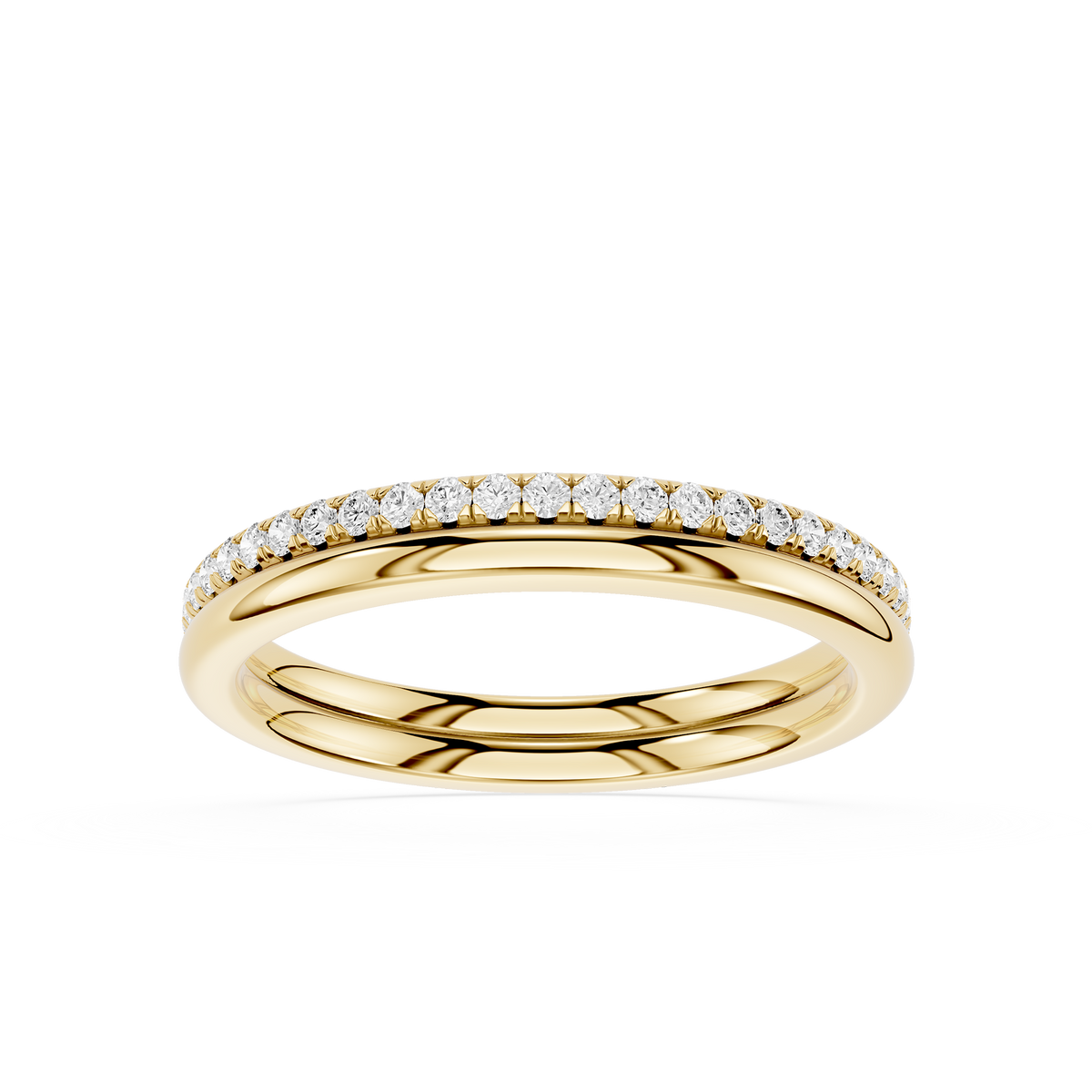
The confusion usually comes when people try to figure out how it differs from a wedding band. Here's the short version:
-
A wedding band worn every day and given at the ceremony symbolizes the marriage itself.
-
An anniversary ring given later symbolizes a specific chapter or milestone, and doesn't need to visually "match" the wedding set.
-
An eternity band is technically a style, not its own category. Still, it's the most common anniversary ring style because a full circle of diamonds reads as "unbroken" or continuous love.
Practically speaking, people often wear anniversary rings stacked with their existing ring set on the right hand, or swap them in as an upgraded wedding band once budgets allow for something nicer than what a couple could afford early on.
Anniversary Ring Styles Worth Knowing
Most anniversary rings fall into a handful of style families. Knowing the terms makes shopping a lot faster.
-
Eternity bands
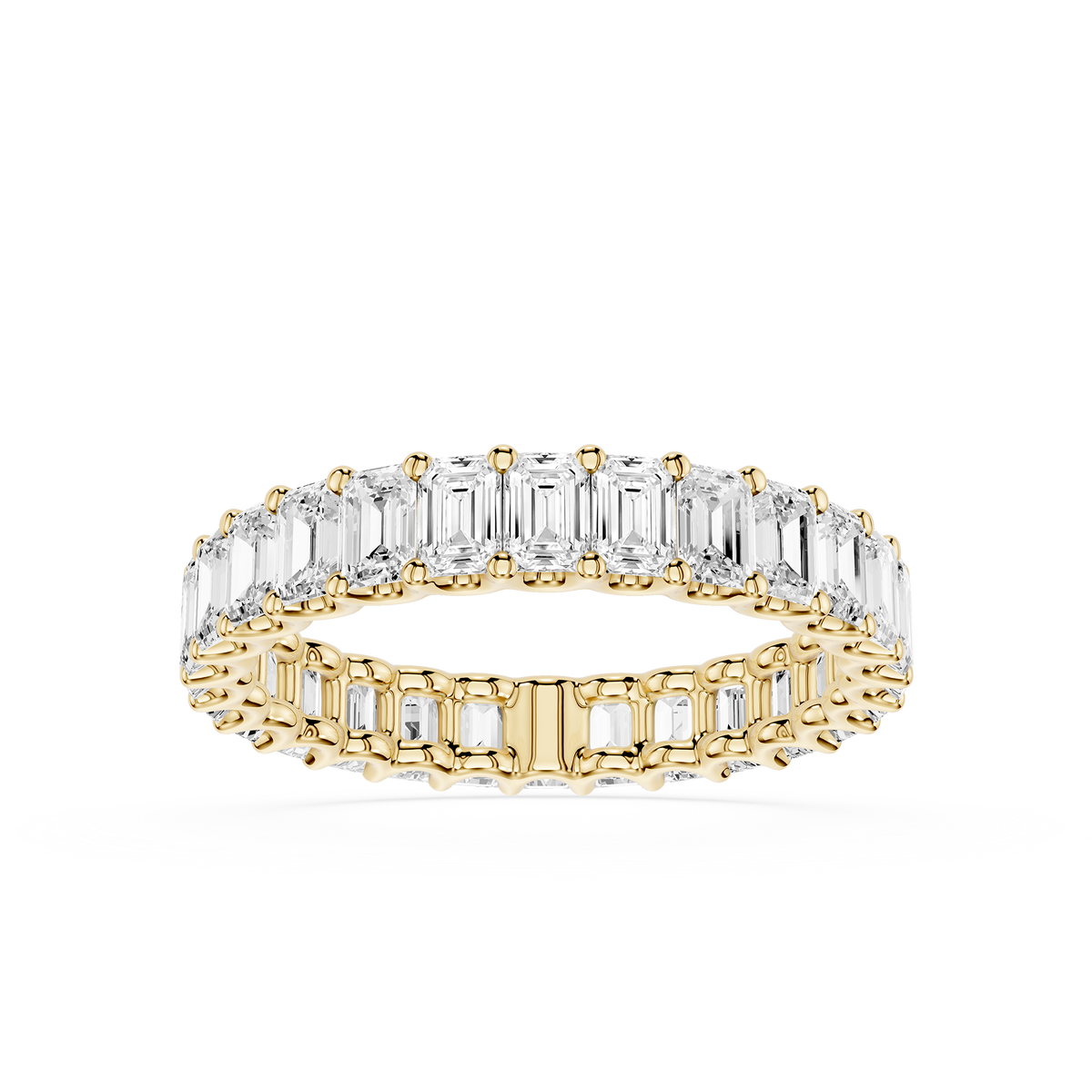
On eternity bands, diamonds (or gemstones) are set continuously around the entire band. Full eternity bands can't be resized easily, so half-eternity styles set stones across the top half only and are a practical middle ground for people whose ring size might change.
-
Three-stone rings
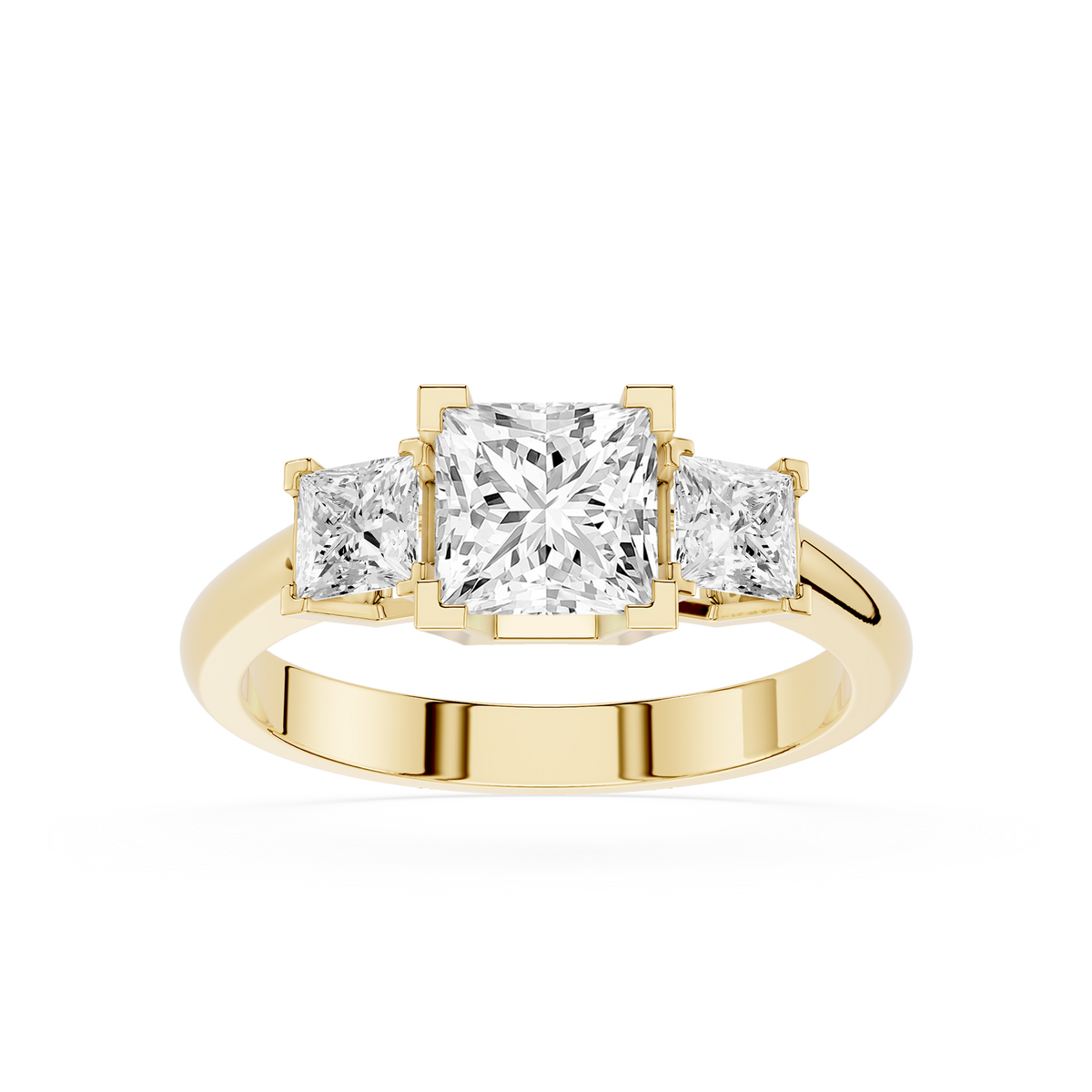
Three-stone rings usually symbolize past, present, and future, though plenty of people like the proportions. This ring works well as a milestone-year gift because you can upgrade the center stone later.
-
Halo and double-halo rings
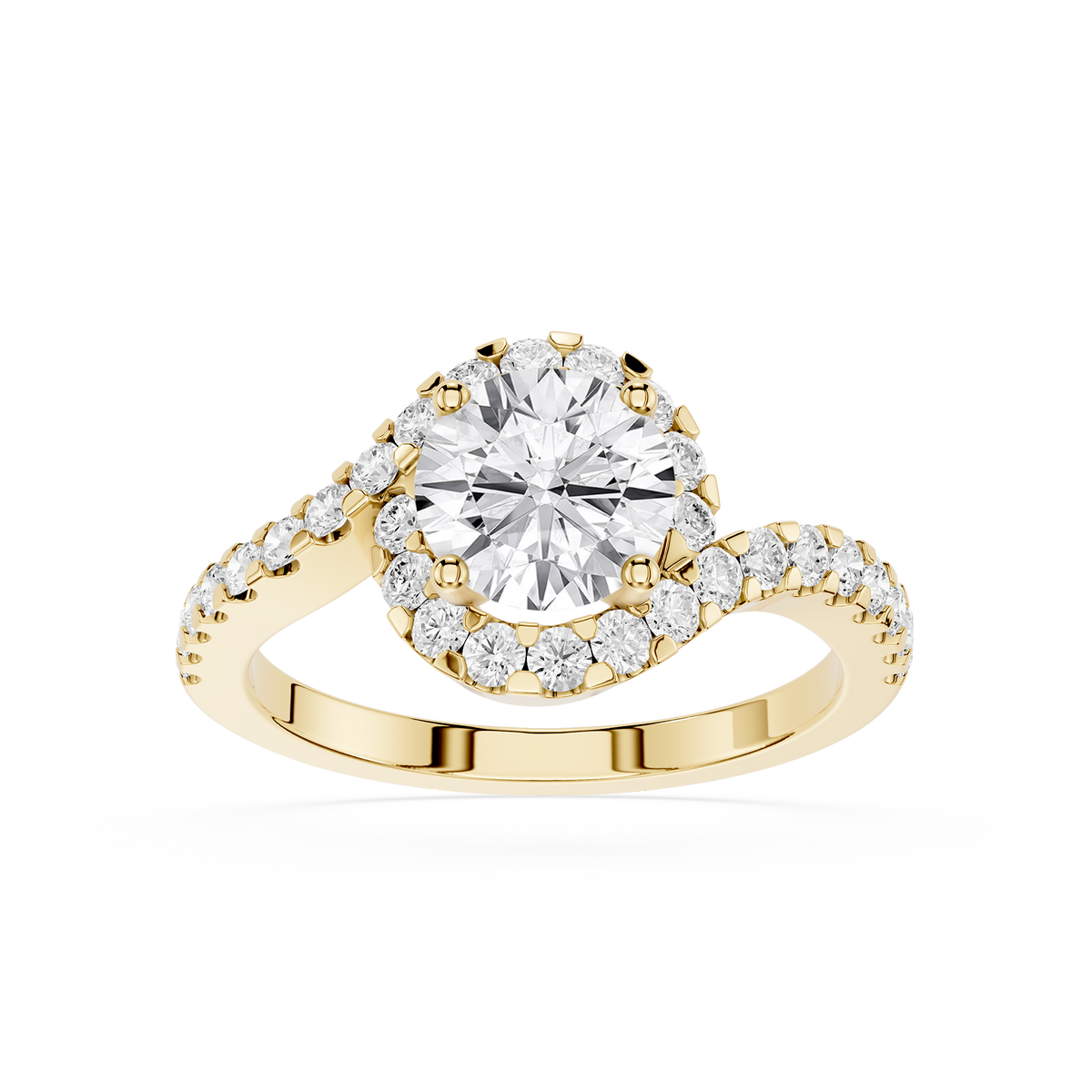
In halo and double-halo anniversary rings, a center stone is ringed by smaller accent diamonds or gemstones like Ruby and Garnet. This style helps make a smaller center diamond look noticeably larger, which matters if you're working with a tighter carat budget.
-
Channel-set and milgrain bands
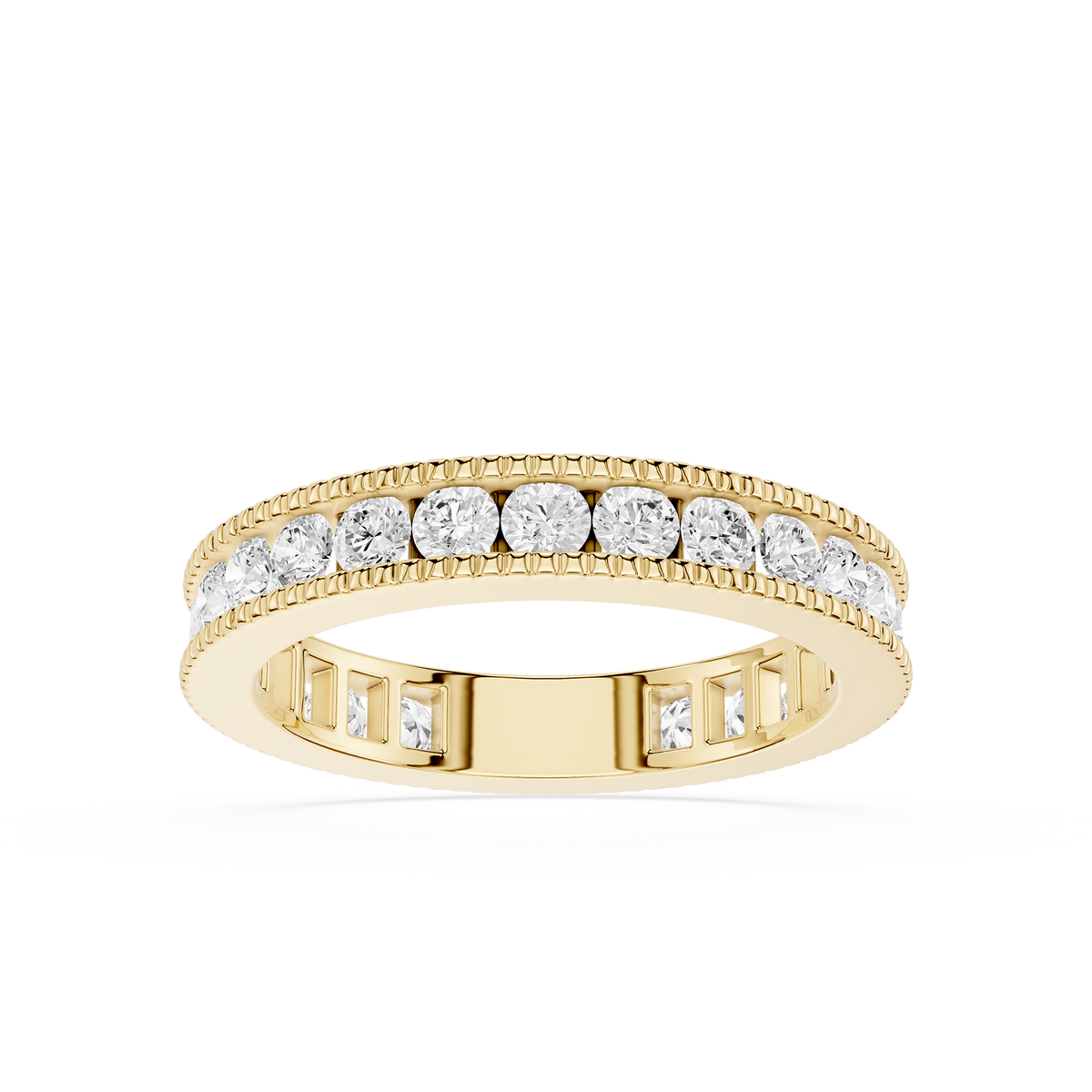
In this type of anniversary ring, the diamonds are set flush into white or rose gold with decorative beaded edges. These sit low, don't snag on clothing, and hold up well for people who work with their hands.
-
Cluster rings
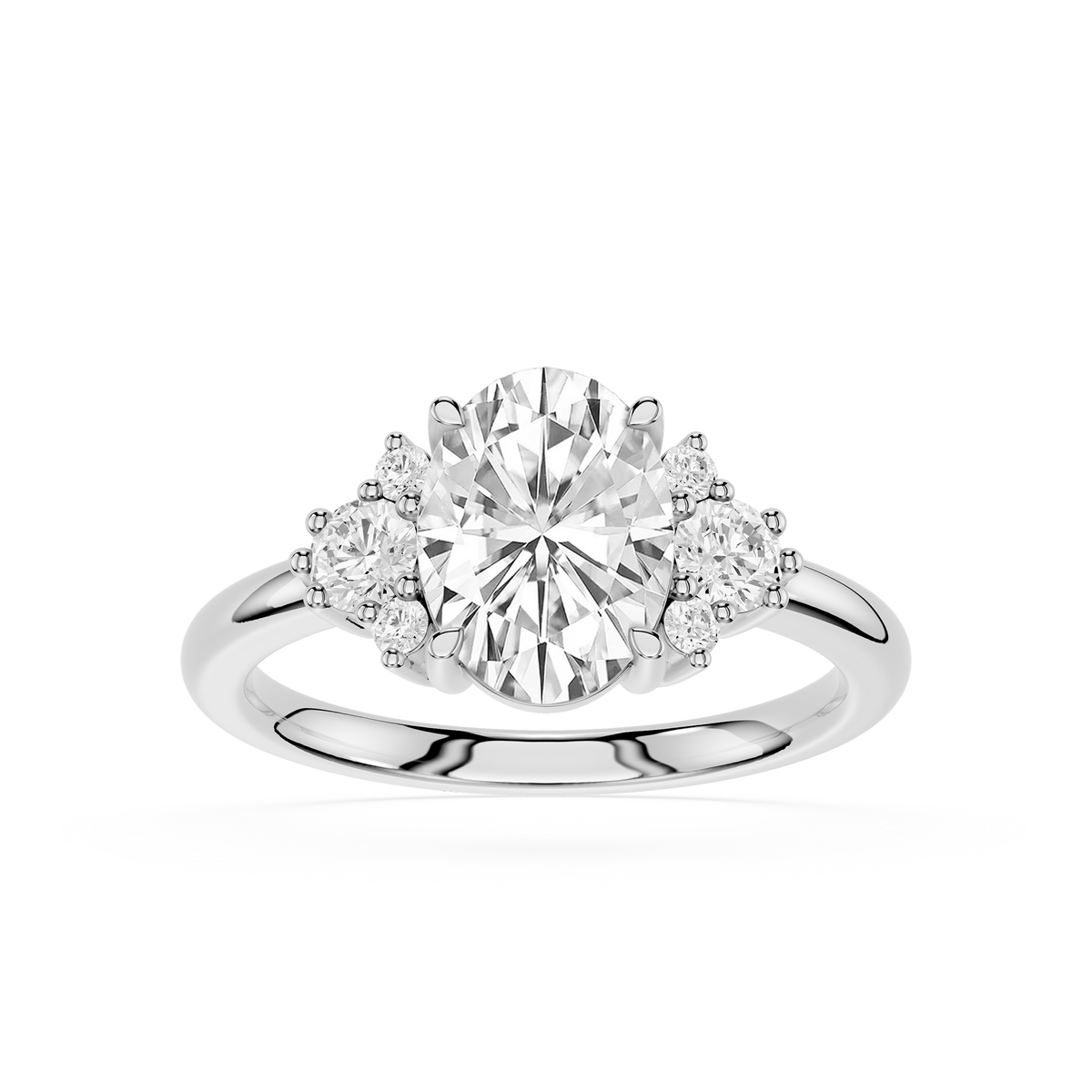
Cluster rings are a grouping of smaller diamonds arranged to look like one larger stone. Usually, these anniversary diamond rings are the most affordable way to get visual size.
-
Stackable bands
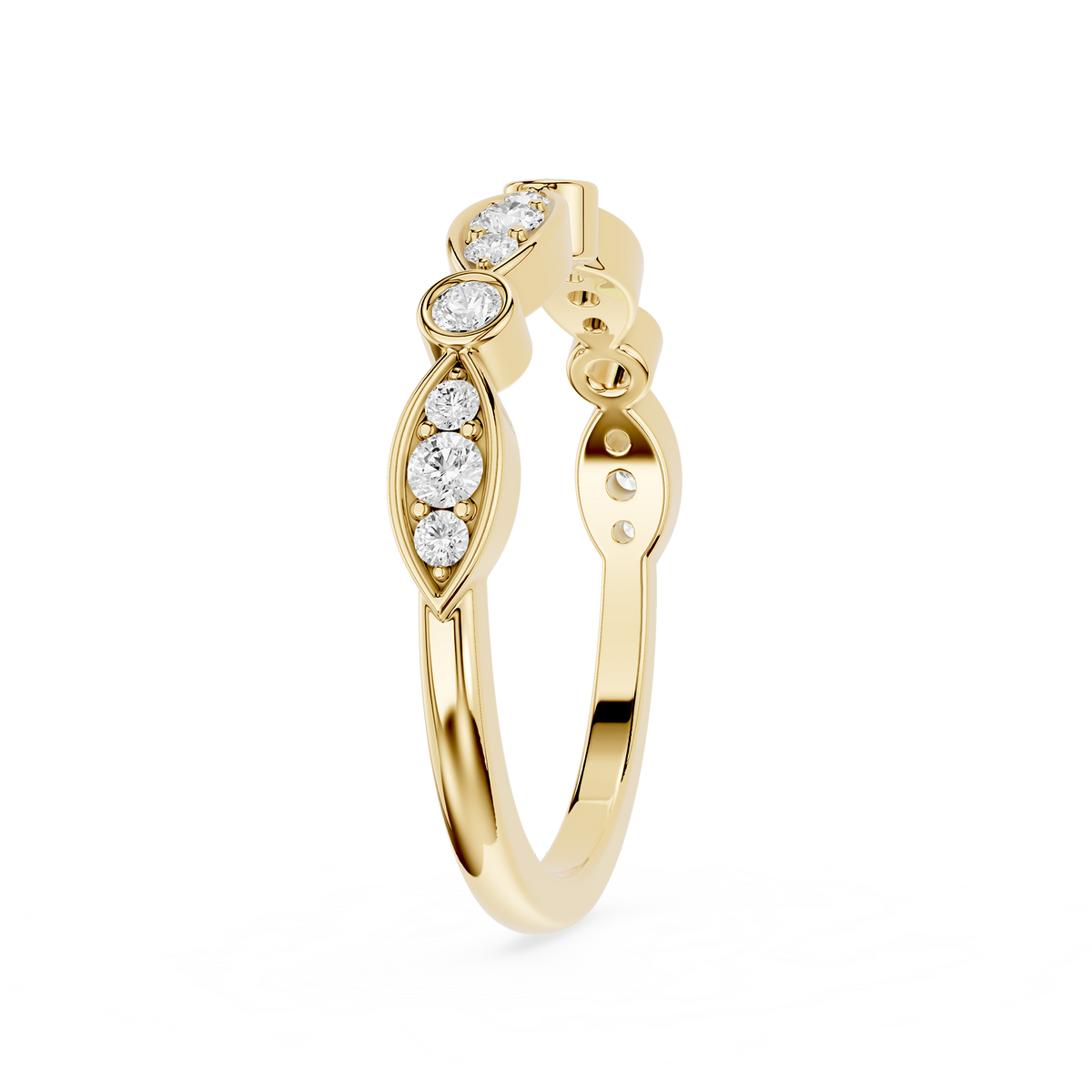
When you want thin, simple rings meant to be worn together, stackable bands for women in rose gold and diamonds are a perfect choice. They're a popular choice when you want to add a new one every few milestone years instead of buying one "big" ring.
Select Anniversary Rings by Milestone Year
Traditional gemstone lists (paper for year one, gold for year fifty) are fun but not very practical for ring shopping. Here's a more useful way to think about it, based on what actually tends to fit each stage financially and symbolically:
-
1st-4th year: On your 1st marriage anniversary or when celebrating the 4th year, gifting a simple stackable band or a slim half-eternity ring sets the foundation for a future stack.
-
5th year: Things have changed by the 5th anniversary. Traditionally marked by sapphire, it's a good year to introduce a colored gemstone alongside diamonds in 14KT white gold.
-
10th year: Diamond eternity bands become popular here, and it's the classic "ten years, ten strong" milestone. If you have a budget of more than $1,000, you can get a lab-grown diamond band with a round brilliant, even in fancy colors.
-
15th-20th year: No, that's when you spend more time in your wedding; at least 15 years, then a three-stone or cluster ring is a prime choice. It is with a slightly larger center stone than what was affordable at the wedding.
-
25th year (silver anniversary): The most commonly upgraded ring, as they celebrate their silver wedding anniversary. Many couples treat this as a chance to buy the ring they couldn't afford the first time around.
-
50th year (golden anniversary): Eternity bands or statement halo rings, frequently in yellow or rose gold to reflect the "golden" theme.
How Much Do Anniversary Rings Cost?
This is the part most guides skip. Real pricing depends on metal, diamond size, and setting style, but here's a realistic breakdown based on current retail ranges:
|
Style |
Typical Price Range |
|
Slim stackable band |
$600-$900 |
|
Channel-set or milgrain band |
$700-$1,300 |
|
Half-eternity band |
$900-$1,500 |
|
Full eternity band |
$1,400-&3,300 |
|
Three-stone ring |
$1,300 - $3,300 |
|
Halo or double-halo ring |
$1,500 - $2,700 |
|
Statement/large center-stone ring |
$3,000 - $6,000+ |
A few things that move the price more than people expect:
-
Diamond origin
Lab-grown diamonds run roughly 30-40% less than mined diamonds of the same size and grade, without any visible difference. Even gemologists need equipment to tell them apart. That's why most recent "how much should I spend" advice online is outdated. It's built around mined-diamond pricing from a few years ago.
-
Metal choice
Platinum costs noticeably more than 14K or 18K gold. Rose and yellow gold typically price close to white gold. You can choose silver for a white-tone finish.
-
Setting complexity
Channel and flush settings protect stones better and often cost a bit more in labor than simple prong settings, even at the same carat weight.
-
Certification
A ring with an IGI, GIA, or GCAL-certified stone will cost a bit more than an uncertified one, which can be worth it for resale value and insurance.
If you want a rough budget rule: many couples aim for roughly what they spent on the wedding band, adjusted up for milestone years like the 10th, 25th, and 50th. No fixed percentage rule actually holds up; spend what fits, not what a marketing formula from decades ago suggests.
Browsing Lockstone Jewels' anniversary ring collection gives a good real-world sense of this range. These rings range from around $650 for a classic eternity band to several thousand for statement designs, all set with certified lab-grown diamonds.
Should You Go With Natural Diamonds Instead of Lab-Grown in Anniversary Rings?
Yes, when you have enough budget, specifically $3,000 to $10,000 for a 1-carat diamond anniversary ring. On the other hand, lab-grown diamond rings come in a wide range of collections and, most importantly, come with authenticated certificates from GIA, IGI, and SGL. The lab-grown diamond anniversary ring remains the top choice worldwide, including in the USA.
If you still have doubts about lab-grown diamonds vs. natural diamonds, that's a valid point before adding a $2,000 ring to your cart. In fact, laboratory-grown diamonds are real diamonds just made in a controlled environment, not naturally.
For an anniversary ring specifically, this matters a lot, because eternity bands and halo settings use several diamonds rather than one. That's exactly where lab-grown pricing makes the biggest difference: a full eternity band with mined diamonds can cost thousands more than the same design in lab-grown stones.
See this 3 Carat Emerald Cut Lab Grown Diamond Eternity Wedding Band or the Round Diamond Milgrain Channel Set Band to show how much size and detail you can get for the money once mined-diamond markup isn't part of the price.
How to Choose the Right Anniversary Ring?
A few practical steps to follow:
-
Set a budget range first, not a style. It narrows things fast and keeps you from falling for something that's a stretch.
-
Check what's already being worn. If the plan is to stack the new ring with an engagement ring and wedding band, look at metal color and band width before anything else. Mismatched metals are the most common regret.
-
Think about how you'll wear it. Someone who works with their hands often does better with a channel-set or flush-set band than a high-prong halo that can snag.
-
Decide if resizing matters. Full eternity bands are hard to resize later; half-eternity or channel-set styles are more flexible.
-
Ask about certification. A certified stone (IGI, GIA, or GCAL) protects the purchase for insurance and resale, and it's a quick way to confirm you're getting what you're paying for.
-
Consider a custom piece for big milestones. For 25th or 50th anniversaries, many couples choose custom rather than off-the-shelf. Lockstone Jewels' custom jewelry service starts with a specific vision (a particular stone shape, engraving, or redesign of an existing ring) rather than a fixed catalog piece.
FAQs
-
What is the difference between an anniversary ring and an eternity ring?
An eternity ring is a specific style where diamonds are set all the way around the band. An anniversary ring is a category based on when it's given (a marriage milestone). Most eternity rings are given as anniversary gifts, but not every anniversary ring is a full eternity band.
-
Which hand and finger does an anniversary ring go on?
Most people wear it on the same finger as their wedding ring, stacked on top of or below the existing rings. Some choose the right hand instead, especially if the left hand is already full or if the ring is a standalone piece rather than a stacking band.
-
What carat and size would I choose in an anniversary diamond ring?
1-carat diamond anniversary ring is enough for a premium look when you choose the right design. But there's a difference between diamond carat and size; carat represents the weight, and size measures the overall diameter.
-
Is it okay to buy your own anniversary ring?
Yes. It's increasingly common, especially for milestone years, to pick the ring together or for one partner to choose their own so it's exactly what they want.
-
Do anniversary rings need to match the wedding set?
No. Matching metal tone is worth considering for a cohesive stacked look, but the design itself doesn't need to match. Many couples intentionally choose something different from their original set.
-
What's the most popular anniversary ring style?
Eternity and half-eternity bands remain the most requested style, largely because the "unbroken circle" symbolism lines up so directly with what the ring is meant to represent.
-
How many carats should an anniversary ring be?
There's no standard, and it depends on budget and setting. A cluster or halo design can look like a larger stone at a lower carat weight, so consider that before assuming you need a bigger number.
-
What to choose between oval and round diamond for 5th wedding anniversary band?
A round diamond is a perfect choice for sparkle, and an oval gives you enough of a look on the finger when wearing an anniversary ring. Oval and round diamonds differ in length and size. Pick wisely.
Final Thought
An anniversary ring doesn't need a strict occasion or a perfect script, and it needs to feel like the right marker for wherever you are in the relationship. Whether that's a slim stackable band for year three or a full diamond eternity band for the 25th, the ring should reflect the years it's celebrating, not a rulebook.
For certified, IGI-graded lab-grown diamond pieces across every style and budget covered here, Lockstone Jewels' anniversary ring collection is a solid place to start browsing, with free shipping, free resizing, and a lifetime warranty on every piece.